
What Is a Roofing Square and Why It Matters
A roofing square is a standard 100-square-foot unit used across the roofing industry to make measuring roof surfaces easier. Contractors use roofing squares because roofs have many shapes, angles, slopes, and sections that make measuring with just square footage tricky. Homes with steep roof pitches, sharp angles, very tall roofs, or fancy architectural styles often have much larger roof areas than the house footprint shows. By using roofing squares, professionals can better estimate material needs, schedule labor, plan installations, and cover the roof accurately. This system also keeps contractor estimates consistent and avoids mistakes caused by differences in total square footage.
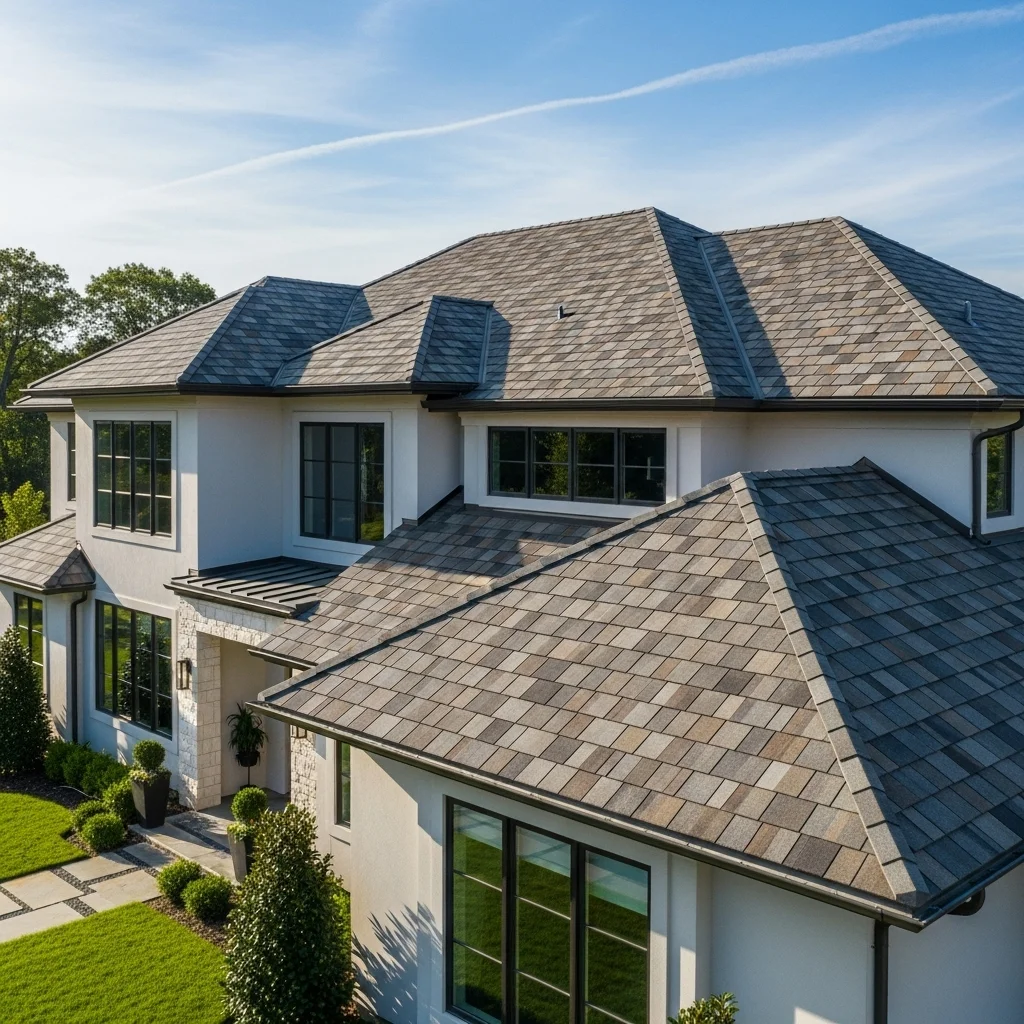
Roofing Materials Sold by the Square
Most roofing materials are sold by the square. Asphalt shingles, luxury shingles, underlayment, and many specialty roofing products come in packaging priced per square. Because materials are made around the 10×10 measurement, roofing squares help contractors order the right amount of materials. Using squares also helps match materials to the roof’s slope, architectural features, dormers, gables, hips, and valleys. Working in squares keeps both suppliers and roofers accurate in planning material amounts and prevents waste.
Table of Contents
- What Is a Roofing Square and Why It Matters
- Roofing Materials Sold by the Square
- Understanding Shingle Bundles
- How to Visualize Your Roof Size Before Replacement
- How to Calculate the Number of Roofing Squares
- Why Home Interior Square Footage Doesn’t Equal Roof Size
- Factors That Change Your Total Roof Area
- Key Cost Factors in Roof Replacement
Understanding Shingle Bundles
Shingle bundles are the packages used to deliver shingles to a roof job. A roofing square covers 100 square feet of roof surface, usually divided into three shingle bundles. Heavier or specialty shingles may need four bundles per square. Roofs have many sections, angles, valleys, and overhangs, so roofers calculate shingle waste based on the roof’s shape. Contractors also consider bundle weight because it affects delivery, labor, and disposal costs during tear-off. Knowing how bundles relate to roofing squares helps make sure the right amount of material is ordered and reduces the risk of running out or wasting shingles.
How to Visualize Your Roof Size Before Replacement
Homeowners often have trouble seeing how big their roof really is. The roof area is usually bigger than the home’s visible footprint. Today, roofers use tools like roof style visualizations and virtual remodeling programs to help homeowners understand how the roof will look with different shingles, styles, and materials. These tools also show how the roof slope, number of roof sections, and multiple facets affect the roof’s appearance. By seeing these details, you can understand how your roof’s shape changes material needs, installation methods, and the best roofing system for your home.
How to Calculate the Number of Roofing Squares
To calculate roofing squares, start with your home’s footprint. This is done with precise length and width measurements, or sometimes by rough outdoor estimates. Next, use a pitch multiplier, slope multiplier, or complexity multiplier to adjust for the roof’s steepness, angles, and complexity. Add roof overhangs and eaves since the roof goes beyond the walls. After all adjustments, divide the total roof area by 100 to get roofing squares. A professional roofer usually does these calculations during a roof inspection to make sure every roof section is measured accurately.
Key Cost Factors in Roof Replacement
Roof replacement cost depends on many factors. The number of roofing squares and total roof area are important. Roof complexity, steep slopes, multiple sections, and pitch changes make labor harder and raise costs. The roofing material like asphalt shingles or luxury shingles also affects price, along with waste from valleys, gables, and rakes. Other costs, like tear-off labor, debris disposal, and dump fees, add up. Local roofing codes and contractor estimating practices also influence the final price. Understanding these factors helps homeowners get accurate roof estimates and avoid surprises during installation or material ordering.
Why Home Interior Square Footage Doesn’t Equal Roof Size
Many homeowners think their interior square footage can show roof size, but that’s not true. Interior square footage measures livable space, not roof coverage. Homes with unfinished attics, garages, additions, multi-story layouts, or complex architectural rooflines have bigger roof areas. Roof overhangs go past the home walls, and multiple stories or roof levels add extra roof sections. These differences mean that interior square footage does not match roof square footage at all.
Factors That Change Your Total Roof Area
Several things can change your roof area. Steep roof pitches, angles, or high roofs make the roof surface bigger because it stretches over the incline. Roofs with many sections—like hips, valleys, dormers, gables, and rakes—need more materials than simple gable roofs. Overhangs, garages, additions, unique architectural features, and differences in roof height all add to total area. These factors change roofing surface area, roof design, and the material needed for the project.